
Mastering The Art of Interior Design: Bohemian BOHO

A Boho room should feel like someone actually lives there. Not like a furniture showroom. Not like every pillow came in a matching set. The best Boho spaces look collected, layered, sunny, and personal, with a little bit of “I found this at a market and had to bring it home” energy.
That’s what makes the style so appealing for a first home, a new place after a move, or even a fixer-upper with good light and blank walls. Boho gives you permission to mix old and new, polished and imperfect, bold and earthy. It’s relaxed, but it’s not random. The magic is in the layers.
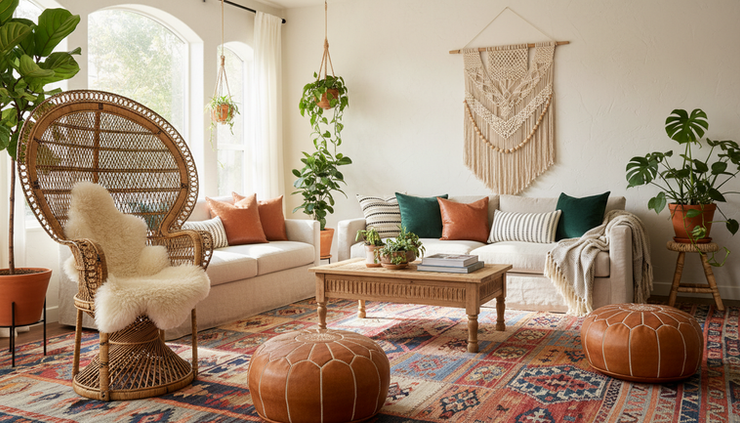
Boho style has roots in art, travel, and rebellion
The word “Bohemian” originally referred to people from Bohemia, a historic region in central-eastern Europe. By the 19th century, the term had taken on a new meaning in Paris, where it became linked to artists, writers, performers, and nomads who lived outside the strict social rules of the time.
That spirit is still baked into Boho design. It doesn’t care much for perfect symmetry or formal furniture plans. It favors rooms that feel personal, creative, and a little wild.
The version most people recognize today gained momentum in the 1960s and 1970s. Think low seating, handcrafted textiles, plants everywhere, and objects gathered through travel or thrifting. It was a soft rebellion against stiff traditional interiors.
That’s why Boho Bohemian Design still feels fresh. It’s not tied to one decade or one exact look. It’s more of an attitude: free-spirited, expressive, and deeply personal.
Boho works best in relaxed, sun-filled rooms
Boho can show up anywhere, but it really shines in rooms where people lounge, read, nap, talk, and gather. Living rooms, bedrooms, sunrooms, guest rooms, and covered patios are perfect candidates.
Warm, sun-drenched places like Southern California, Ibiza, and Tulum helped shape the look we often associate with Boho now. White walls, natural light, woven furniture, breezy fabrics, and indoor plants all feel right at home in these climates. But the style travels well. A Boho room can work in a city apartment, a suburban house, a cabin, or a new-build home that needs more soul.
The key is comfort. If a room feels too precious to sit in, it’s probably missing the point.
For a new homeowner, Boho is also wonderfully forgiving. You don’t need to buy everything at once. In fact, the style looks better when it grows over time. A vintage rug from one place, a rattan chair from another, a thrifted lamp, a framed textile, a stack of books, and a few healthy plants can do more than a full matching furniture suite.
Start with an earthy base, then add rich color
Boho color can go in a few directions, but the strongest rooms usually start with warm, natural shades. They create a calm base that makes the bolder pieces feel intentional.
Good foundation colors include:
Cream
Sand
Warm white
Camel
Clay
Taupe
Soft brown
Natural linen
Once that base is in place, bring in richer tones. True Boho loves jewel colors and sunbaked shades. Amethyst, emerald, mustard yellow, terracotta, magenta, rust, and deep teal all work beautifully.
The trick is to repeat each color at least once. If you add a magenta pillow, bring in a bit of that color through art, a patterned rug, or a throw. If you use emerald in a velvet cushion, echo it with plants or a ceramic vase.
Boho doesn’t mean every color at full volume. It means color has warmth, rhythm, and personality.
Here’s a simple palette that works in many homes:
Warm white walls
Natural rattan furniture
Terracotta rug
Mustard pillows
Emerald plants
Magenta or amethyst art
That combination feels layered without getting chaotic.

Choose furniture that feels light, low, and touchable
Boho furniture usually avoids heavy, formal pieces. Instead, it leans into natural materials and easy shapes.
Rattan, bamboo, wicker, cane, and light mango wood are all great choices. They bring texture without making the room feel weighed down. A woven chair or cane-front cabinet can soften a space instantly, especially if the room has plain drywall, builder-grade flooring, or simple modern finishes.
Some classic Boho pieces include:
Rattan peacock chairs
Low-slung sofas
Floor cushions
Moroccan poufs
Carved wood screens
Cane cabinets
Wicker side tables
Vintage trunks
Light wood benches
If you’re furnishing a new home, resist the urge to buy a full set. Matching sets can flatten a Boho room. Instead, pair a clean-lined sofa with a vintage rug, a rattan chair, and a hand-carved side table. The mix is what makes it feel alive.
Scale still matters, though. Boho can be maximalist, but every room needs breathing room. If the space is small, choose one standout chair instead of three. If the ceiling is low, skip a huge hanging chair and use floor cushions or poufs instead.
A good rule: let the room feel full, not stuffed.
Layer textiles like you mean it
Textiles are the heart of Boho style. Rugs, pillows, throws, curtains, wall hangings, and upholstery do most of the visual work.
Start with the floor. A vintage Persian rug, kilim rug, or flatweave with warm colors can anchor the room. If one rug feels too small, layer it over a larger jute or sisal rug. This adds texture and makes the space feel more finished.
Then build upward.
Add pillows in different sizes, but don’t make them too perfect. Mix patterns, solids, stripes, and embroidered fabrics. Choose a common color thread so the mix feels connected.
Use throws with fringe, tassels, or chunky texture. Add curtains in gauze, linen, cotton, or printed fabric. Hang a macrame piece, a woven wall basket, or a textile over the bed or sofa.
This is where Boho separates itself from cleaner styles of Interior Design. Minimal rooms often rely on shape and negative space. Boho relies on touch, pattern, memory, and comfort.
A few combinations that rarely fail:
Jute rug with a faded Persian rug on top
Linen sofa with embroidered pillows
Cotton curtains with bamboo shades
Fringed throw over a leather or rattan chair
Kilim pillow on a neutral bed
Macrame wall hanging above a wood console
Patterns don’t need to match. They need to talk to each other.

Bring in plants, but choose the right ones for the room
Boho and houseplants are almost inseparable. The “indoor jungle” look fits the style because plants add softness, shape, and life.
A sunny room can handle dramatic plants like fiddle-leaf figs, bird of paradise, rubber plants, or large palms. Lower-light spaces may do better with pothos, snake plants, ZZ plants, or philodendrons. Hanging planters, plant stands, woven baskets, and terracotta pots all add to the look.
Place plants at different heights:
Tall plant in a corner
Medium plant on a stool
Trailing plant on a shelf
Small plant on a coffee table
Hanging plant near a window
This gives the room movement. It also keeps all the greenery from sitting at the same visual level.
If plant care isn’t your thing yet, start small. A few healthy plants look better than a dozen struggling ones. Boho should feel lush, not like a plant rescue mission.
Add pieces that tell a story
The best Boho homes feel collected, not decorated in one weekend. That story can come from travel, family, local makers, flea markets, estate sales, or objects found slowly over time.
Look for pieces with texture, age, or handwork:
Ceramic bowls
Woven baskets
Carved wood boxes
Beaded mirrors
Vintage art
Handmade pottery
Brass candleholders
Books with worn spines
Framed fabric or scarves
Market bags hung on hooks
A room full of brand-new “Boho style” items can feel too themed. A room with a few real finds feels more grounded.
This doesn’t mean every item needs a dramatic backstory. Maybe the basket came from a weekend trip. Maybe the rug was found at a neighborhood vintage shop. Maybe the art was made by a friend. What matters is that the room doesn’t feel anonymous.
For new homeowners, this is a huge advantage. You can start with basics and let the personality build. A simple sofa and bed can stay for years while the layers around them change.
Keep maximalism from turning into clutter
Boho is often maximalist, but maximalist doesn’t mean messy. The goal is rich and layered, not crowded and confusing.
One easy way to keep control is to repeat materials. If the room has rattan, bring it in two or three places. If you use brass, repeat it in a lamp, mirror, or small tray. If terracotta shows up in the rug, echo it in pottery or pillows.
Another trick is to create quiet zones. A full gallery wall can work beautifully if the furniture below it is calmer. A patterned rug can shine if the sofa is simple. A very layered bed looks better with clean nightstands.
Use trays, baskets, and cabinets to hide the everyday stuff. Remote controls, chargers, mail, pet toys, and extra blankets can live in woven storage instead of taking over the room.
A balanced Boho room often includes:
One or two major focal points
A mix of patterns in related colors
Natural textures repeated throughout
Plants at different heights
Some open wall or floor space
Storage that blends with the style
If the room starts to feel too busy, remove one color family or one pattern type. Editing doesn’t kill the Boho feel. It helps the good pieces stand out.

Try Boho in one room before carrying it through the house
If committing to a whole-home style feels like a lot, start with one space. A bedroom is a great first project because textiles can change the entire mood quickly. A living room is another smart choice because it gives you room to layer rugs, seating, plants, and art.
For a bedroom, begin with:
Warm white or clay-toned walls
Linen or cotton bedding
A vintage-style rug
Woven lamps or pendant lights
A wood bench or rattan chair
Plants near the window
One large textile or art piece over the bed
For a living room, begin with:
A comfortable sofa in a neutral fabric
One patterned rug
Rattan or cane accent seating
Poufs or floor cushions
A mix of pillows
A large plant
Woven baskets for storage
Once the first room feels right, carry a few elements into nearby spaces. Maybe it’s the same warm palette, the same rattan texture, or the same plant-filled feel. That keeps the home connected without making every room identical.
Let the home feel collected, not copied
Boho design works because it gives a home room to breathe, change, and reflect real life. It welcomes the vintage rug with a faded edge, the rattan chair that doesn’t match the sofa, the handmade bowl on the coffee table, and the plant that keeps reaching toward the window.
Start with warm neutrals. Add jewel tones and earthy colors. Choose natural materials. Layer textiles with confidence. Bring in plants. Then make space for the pieces that actually mean something.
A free-spirited home doesn’t need to follow every rule. It just needs to feel comfortable, personal, and alive.


Comments