
Mastering The Art of Interior Design: Coastal Design

A coastal home should feel like you opened the windows and let the ocean air do half the decorating.
That doesn’t mean filling every shelf with shells, anchors, rope knots, and signs that say “beach.” True coastal design is softer than that. It’s relaxed, polished, and tied to nature in a way that feels effortless. Think Hamptons porches, Nantucket cottages, Mediterranean villas, and breezy rooms where sunlight, linen, pale woods, and woven textures do the heavy lifting.
The best coastal spaces feel peaceful without looking empty. They’re casual without feeling unfinished. And yes, they can work beautifully even if the closest beach is hours away.
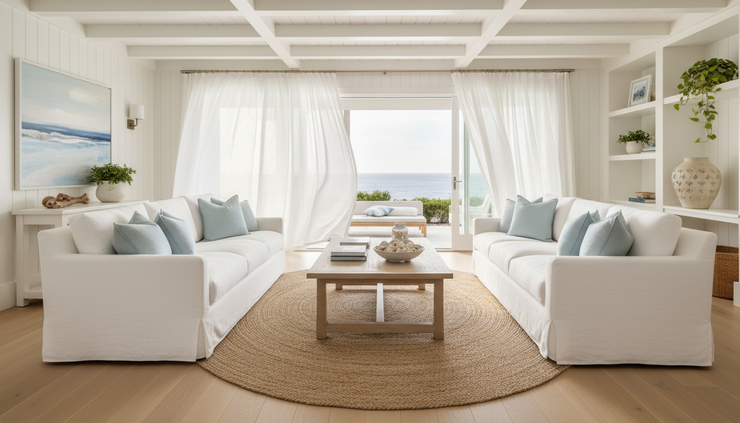
Coastal style starts with the feeling, not the theme
The origin of coastal design comes from homes built around the water. The Hamptons, Nantucket, the Mediterranean coast, and classic seaside towns all shaped the look. These homes were made for long afternoons, open doors, salty air, and easy movement between inside and outside.
That’s the key idea. Coastal style is about bringing the shoreline feeling indoors, not copying the beach literally.
A sophisticated coastal room usually avoids:
Anchor prints
Oversized seashell collections
Boat wheels on the wall
Bright navy and red sailor themes
Signs with beach sayings
Too many themed accessories
Those choices can turn coastal into nautical fast. Nautical decor has its place, especially in a lake house, child’s room, or playful vacation rental. But if the goal is a light, elevated, breezy home, use restraint.
Better coastal design leans on:
Soft white walls
Watery blues and greens
Sandy neutrals
Light woods
Natural fibers
Casual linen and cotton
Open, uncluttered rooms
A strong connection to sunlight and outdoor views
If you’ve typed Costal Design into a search bar, the style you’re probably looking for is this easy, shoreline-inspired look: calm, natural, and never too themed.
Natural light is the whole point
Coastal design needs light. That doesn’t mean every room has to be flooded with sunshine all day, but the style works best when light can move freely.
Large windows, sliding glass doors, French doors, skylights, and open layouts all support the look. In coastal homes, the line between indoor and outdoor living often feels blurred. You might see a living room that flows right onto a deck, a kitchen with doors to a patio, or a dining area set beside big windows.
If a room feels dark, heavy, or closed off, coastal style can still work, but it needs a few smart adjustments.
Try these first:
Use warm white or soft white paint to reflect light.
Replace heavy drapes with linen or sheer curtains.
Keep window trim crisp and simple.
Choose lighter rugs instead of dark floor coverings.
Use mirrors across from windows when the placement feels natural.
Pick furniture with exposed legs to make the room feel more open.
The goal isn’t to make the house look stark. It’s to let the room breathe.
A coastal room should feel like morning light, even at 4 p.m.
The coastal color palette comes straight from the shore
The easiest way to get coastal color right is to picture a quiet beach before it gets crowded. The colors are soft, slightly faded, and natural.
Start with a base of crisp white, warm white, or pale cream. These shades feel like clouds, seafoam, sun-bleached walls, and fresh cotton. From there, layer in sandy beige, soft taupe, pale driftwood gray, sea glass green, watery blue, and occasional deeper navy.
The trick is to keep contrast gentle.
A room with white walls, a jute rug, a linen sofa, pale blue pillows, and a whitewashed coffee table already feels coastal. You don’t need a single shell-shaped lamp.
Here’s a simple color guide:
Coastal color | What it adds | Where to use it |
Crisp white | Freshness and light | Walls, trim, bedding, curtains |
Sandy beige | Warmth and softness | Rugs, upholstery, woven shades |
Watery blue | Calm and depth | Pillows, art, tile, accent chairs |
Sea glass green | A natural, relaxed note | Vases, textiles, bathroom accents |
Driftwood gray | Weathered character | Wood finishes, frames, side tables |
Soft navy | A grounded accent | Stripes, lamps, hardware, small decor |
Use bold color carefully. A little navy, charcoal, or deep blue can keep a coastal home from feeling washed out. Just don’t let it take over unless you’re going for a moodier coastal look.

The right woods should look sun-washed
Wood is one of the biggest differences between coastal design and other light, neutral styles. Coastal wood should usually look as if it has been softened by salt, sun, and time.
That means light, matte, and relaxed.
Best wood tones include:
Whitewashed pine Great for ceilings, wall paneling, casual furniture, and beach cottage details.
Light oak A safe, timeless choice for floors, dining tables, vanities, and built-ins.
Ashy oak Good when you want a slightly cooler, more refined look.
Driftwood finishes Perfect for coffee tables, console tables, mirror frames, and accent pieces.
Natural cane or rattan Warm, casual, and ideal for chairs, cabinet fronts, trays, and lighting.
Try to avoid very glossy, dark, red-toned wood if you want a classic coastal feel. Cherry, espresso, and heavy mahogany can make a room feel more traditional than breezy. If you already own darker pieces, balance them with lighter fabrics, pale walls, and woven textures.
You don’t have to replace every piece of furniture. Sometimes one weathered oak coffee table or a set of woven counter stools changes the whole mood.
Texture is the heartbeat of the style
A coastal room without texture can feel plain. The colors are quiet, so the materials need to bring warmth and interest.
This is where woven pieces shine.
Use natural textures like:
Seagrass
Jute
Sisal
Rattan
Cane
Wicker
Linen
Cotton
Raffia
Bouclé in small amounts
A seagrass rug under a linen sofa instantly makes a room feel more relaxed. A rattan pendant over a breakfast table adds warmth without clutter. Linen curtains bring softness and movement. Beadboard paneling can make a bathroom, mudroom, or hallway feel like it belongs in a beach cottage.
The key is layering. One woven basket won’t carry the room. A jute rug, rattan chair, linen sofa, cotton pillows, and pale wood table together create that easy coastal feeling.
Just keep textures natural and breathable. Coastal style doesn’t love anything too shiny, plastic, or synthetic-looking.
Choose furniture that feels relaxed but still polished
Coastal furniture should invite you to sit down. Comfort matters. This is not the style for stiff rooms where everyone is afraid to touch the sofa.
Slipcovered linen sofas are a staple for a reason. They look casual, clean, and lived-in. They’re also practical for new homeowners who want a fresh look without feeling too precious.
Other strong coastal furniture choices include:
Deep sofas with washable slipcovers
Upholstered dining chairs in linen or cotton blends
Woven accent chairs
White oak or weathered wood coffee tables
Simple beds with linen headboards
Benches with rush, cane, or woven seats
Open shelving with light wood or painted finishes
Aim for simple shapes. Coastal furniture doesn’t need ornate carving or heavy details. Clean lines, soft corners, and comfortable proportions work best.
If you’re buying for a new home, start with the largest pieces first. Get the sofa, rug, dining table, and bed right before spending money on accessories. The big items set the tone. Decor can come later.

Keep the decor subtle and personal
Coastal decor works best when it feels collected instead of themed. Think handmade ceramics, framed landscape art, woven trays, glass lamps, linen books, and simple greenery.
A few good choices:
Clear glass pendant lights or table lamps
Ceramic vases in white, blue, or green
Framed watercolor-style coastal art
Woven baskets for storage
Pale stone bowls
Linen lampshades
Driftwood-style mirrors
Fresh branches or simple greenery
If you love shells, use them sparingly. A single beautiful shell in a bowl can look elegant. A shelf packed with shells, starfish, and beach signs can feel more like a souvenir shop.
The same goes for stripes. Blue and white stripes are classic, but use them in small doses, like pillows, towels, or a bench cushion. Mix them with solids so the room doesn’t feel too busy.
A good rule: if a guest can tell the room is coastal without seeing one literal beach object, you’re on the right track.
Make indoor and outdoor spaces feel connected
Coastal design shines when the home opens to the outdoors. That’s why the style is so popular in Florida, California, the Carolinas, and other waterfront areas. But it also works inland when the home has a patio, porch, balcony, or even a sunny backyard.
Try to repeat materials and colors from indoors to outdoors. If the living room has white linen, pale wood, and blue accents, carry that feeling onto the porch with light cushions, woven outdoor chairs, and simple blue planters.
Good indoor-outdoor moves include:
Matching indoor and outdoor cushion colors
Using similar wood tones on patio furniture
Choosing sheer curtains near doors
Keeping window treatments light
Placing greenery where it can be seen from inside
Using natural fiber looks in outdoor-safe materials
A sliding door or patio view becomes part of the room. Treat it like a design feature, not an afterthought.
Coastal design can work away from the water
You don’t need a beach address to enjoy this style. Plenty of inland homes use coastal elements because the mood feels restful. After moving, renovating, or buying a first home, that kind of calm can be pretty appealing.
The trick is to adapt the style to the house you have.
A suburban home might use coastal design through white walls, oak floors, rattan stools, linen curtains, and soft blue accents. A city condo might lean on pale upholstery, woven shades, and glass lighting. A newer build might use beadboard in a powder room or light oak cabinets in the kitchen.
The style works best when it feels honest to the space. If the architecture isn’t coastal, don’t force it with too many beach references. Use the palette, light, and textures instead.
When people talk about Interior Design styles that age well, coastal stays popular because it’s tied to nature rather than trend. Sunlight, cotton, linen, wood, and water-inspired color rarely feel out of place.

A simple room-by-room way to bring coastal style home
If you’re starting from scratch, don’t try to redo the whole house at once. Pick one room and build from the basics.
In the living room
Start with a light sofa, a natural fiber rug, pale wood tables, and soft blue or green pillows. Add woven baskets for blankets and a large glass lamp or pendant if the room needs height.
Keep surfaces open. Coastal rooms lose their calm when every table is covered.
In the kitchen
White, warm white, or light wood cabinets all work well. Add woven bar stools, simple glass pendants, light stone counters, and maybe a soft blue tile if you want color.
If a full remodel isn’t happening, swap in rattan counter stools, linen Roman shades, or pale ceramic accessories.
In the bedroom
Use white or cream bedding as the base. Layer in a linen duvet, cotton quilt, pale blue pillows, and light oak or whitewashed nightstands.
The bedroom should feel quiet. Skip heavy patterns and choose texture instead.
In the bathroom
Bathrooms are perfect for coastal details. Beadboard paneling, white tile, pale blue walls, woven baskets, and brushed nickel or aged brass hardware all fit.
Keep it clean and spa-like. A coastal bathroom should feel fresh, not cluttered.
On the porch or patio
Use comfortable seating, washable cushions, woven outdoor pieces, and plants that suit your climate. Repeat the colors from inside so the spaces feel connected.
Even a small balcony can feel coastal with a light outdoor rug, a rattan-look chair, and one blue planter.
Common coastal design mistakes to avoid
Coastal style looks easy, but a few choices can throw it off.
Using too many beach-themed objects
A few subtle pieces are fine. Too many make the room feel staged.
Choosing colors that are too bright
Coastal blues and greens usually look better when they’re softened. Think misty, watery, or sun-faded.
Forgetting texture
White walls and beige furniture need woven pieces, linen, wood, and greenery to feel warm.
Going too formal
If the room looks like nobody can sit down with bare feet and a cup of coffee, it’s probably too stiff.
Ignoring light
Heavy curtains, dark rugs, and bulky furniture can block the breezy feeling before the style even has a chance.
The easiest way to start
If you want a quick coastal refresh, begin with three changes:
Lighten the window treatments
Replace heavy drapes with linen panels, sheers, or woven shades.
Add one natural fiber rug
Jute, sisal, or seagrass can change the whole feel of a living room, bedroom, or dining area.
Bring in one watery color
Try pale blue pillows, sea glass green lamps, or soft coastal artwork.
From there, layer slowly. Coastal design should feel relaxed, so there’s no need to rush it. Let the home evolve with pieces that feel comfortable, useful, and connected to the way you actually live.
A light and breezy home doesn’t come from beach decor. It comes from sunlight, softness, natural materials, and a little breathing room. Start there, and the coastal feeling will follow.


Comments