
Mastering The Art Of Interior Design: Industrial

Industrial design has a way of making a room feel honest. Nothing is too polished. Nothing tries too hard. Brick, steel, concrete, old wood, exposed pipes, and big windows all get to stay visible instead of being covered up.
That’s the charm.
This style grew out of old factories, warehouses, and manufacturing buildings that were turned into homes in cities like New York, Chicago, and London. People didn’t hide the rough edges because those rough edges were the best part. The high ceilings, giant windows, open floor plans, ductwork, and brick walls became the design.
And while industrial interiors still feel right at home in converted lofts, the look has moved far beyond city apartments. It works in new builds, townhomes, suburban houses, restaurants, studios, and even smaller spaces when it’s handled with care.

What makes industrial interior design feel different
Industrial interiors are built around raw materials and visible structure. Instead of hiding beams, vents, pipes, and worn surfaces, the room treats them like features.
That’s what separates this style from a basic modern room with a few black metal accents. True industrial design has some grit. You can see the building’s bones.
Common industrial elements include:
Exposed brick walls
Polished or sealed concrete floors
Visible ductwork and piping
Black metal window frames
Reclaimed wood furniture
Factory-style lighting
Leather seating
Open shelving
Matte black, iron, steel, and aged brass finishes
The style also tends to favor open layouts. It looks especially good in rooms with high ceilings, large windows, and fewer interior walls. That doesn’t mean every industrial space has to be a warehouse loft, though. A regular home can still pull it off with the right materials, furniture, and lighting.
The trick is knowing when to stop. Too much metal and concrete can make a home feel cold. Too many themed objects can make it feel like a restaurant set. The best industrial rooms feel collected, lived-in, and relaxed.
Start with the shell of the room
Before buying furniture, look at the room itself. Industrial design works best when the architecture sets the tone.
If the home already has brick, concrete, beams, tall ceilings, or metal-framed windows, let those features breathe. Don’t cover them with heavy window treatments, glossy paint, or fussy trim. Keep the view clean and simple.
If the space is newer and doesn’t have old factory bones, you can still create the feeling through finishes.
Try one or two of these moves:
Add a brick veneer wall behind the sofa, bed, or dining table
Use concrete-look tile in an entry, bathroom, or kitchen
Choose black-framed interior doors or shower glass
Install open wood and metal shelving
Paint trim or doors in matte black
Use exposed-bulb or cage-style lighting
A little goes a long way. One brick wall can do more than four walls covered in faux industrial details. The goal is to create contrast and texture, not make the whole house look unfinished.
If you’re figuring out how to design industrial style in a standard home, start with the biggest visible surfaces: walls, floors, windows, and lighting. Once those feel right, the smaller choices get much easier.
Build the palette with dark neutrals and warm contrast
Industrial rooms usually lean on moody, grounded colors. Think charcoal gray, deep black, rust, brown leather, weathered wood, and brick red. These shades create the raw urban mood people love about the style.
But here’s where a lot of rooms go wrong. If everything is dark, the space can turn flat and heavy.
Use contrast to keep it fresh.
A strong industrial palette might include:
Base colors
Accent colors
Material colors
Softening colors
White, warm gray, concrete gray, soft black
Brick red, rust, tobacco brown, deep green
Aged steel, black iron, dark oak, distressed pine
Cream, camel, oatmeal, warm taupe
A white wall can actually make brick, metal, and wood look better because it gives the eye a place to rest. This is why many industrial lofts pair raw brick with crisp white walls. The white doesn’t fight the architecture. It frames it.
For paint, skip anything too bright or candy-colored. Industrial design usually looks best with muted, earthy shades. If you want color, try a dark olive cabinet, rust-colored rug, or navy-black accent wall.
Mix cold materials with warm ones
Industrial design loves steel, iron, concrete, glass, and brick. These materials are strong and graphic, but they’re also hard. To make the room feel like a home, mix them with warmer textures.
Reclaimed wood is one of the easiest choices. A rough-hewn dining table, distressed pine console, or dark oak coffee table can soften all the metal lines around it. The imperfections in old wood fit the industrial mood because they feel real, not overly polished.
Leather works the same way. A worn brown leather sofa, especially a Chesterfield, instantly adds warmth and age. It also holds up well visually against brick and metal.
Good pairings include:
Black steel shelving with rough wood shelves
A concrete floor with a wool area rug
Brick walls with linen curtains
A leather sofa with chunky knit pillows
Metal dining chairs with a reclaimed wood table
Factory pendants over a warm wood kitchen island
The best rooms have tension. Smooth next to rough. Matte next to worn. Cold next to warm. That mix keeps the style from feeling one-note.
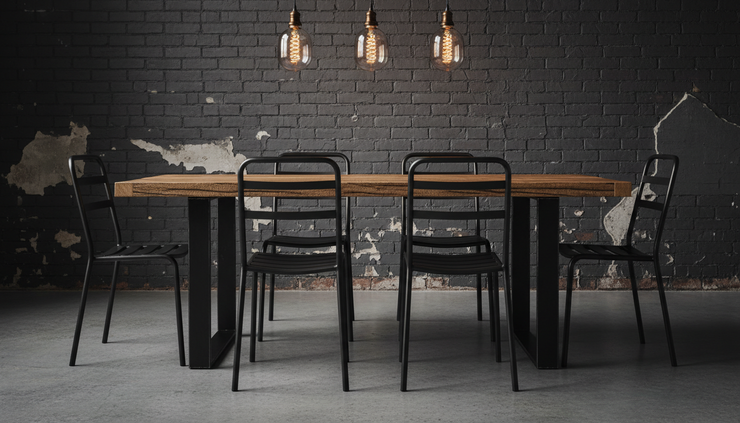
Choose furniture with weight and purpose
Industrial furniture usually has a sturdy, practical quality. It doesn’t look delicate. It feels like it could have come from a workshop, warehouse, old school, or factory floor.
That doesn’t mean every piece needs to be huge. In a smaller home, oversized furniture can quickly take over. Look for pieces that have visual strength without eating the room.
Great industrial furniture choices include:
Chesterfield leather sofas
Metal and wood coffee tables
Drafting stools
Low-profile platform beds
Steel bookcases
Locker-style cabinets
Simple dining benches
Trunk-style storage pieces
Distressed leather lounge chairs
A Chesterfield sofa is one of the most recognizable pieces in this style. The tufting adds a classic note, while the leather keeps it rugged. Brown, cognac, oxblood, charcoal, and black all work well.
For chairs and stools, metal frames are a natural fit. Drafting stools, factory stools, and café-style metal chairs can all work, especially around kitchen islands and dining tables.
Just be careful with novelty. One vintage factory cart coffee table can look cool. A room full of gears, signs, pulleys, and faux machine parts can feel forced. Pick a few strong pieces and let them stand on their own.
Let lighting set the mood
Lighting can make or break an industrial room. Since the materials are often dark and matte, bad lighting can make everything feel gloomy. Good lighting brings the whole look to life.
Factory-style cage pendants are a classic choice. So are black metal sconces, pulley lights, dome pendants, and simple exposed-bulb fixtures. Edison-style bulbs are common, but use them thoughtfully. Too many visible bulbs can feel harsh, especially at night.
Warm light is your friend here. Look for bulbs that give off a soft, cozy glow instead of a cold white cast. Industrial rooms need that warmth to balance concrete, steel, and black finishes.
Layer the lighting in three ways:
Overhead lighting for general brightness
Task lighting for reading, cooking, and working
Accent lighting to highlight brick, art, shelves, or beams
A black metal floor lamp next to a leather sofa can make a reading corner feel finished. Wall sconces on a brick wall can bring out texture. Pendants over a kitchen island can help tie the whole space together.
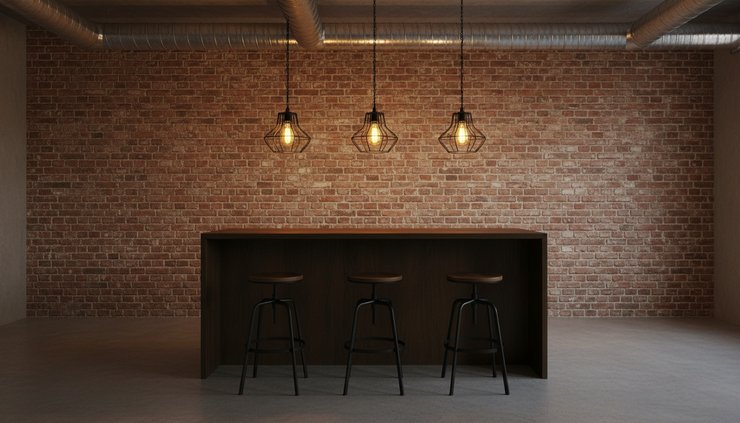
Keep the layout open but comfortable
Industrial design comes from open factory and warehouse spaces, so it naturally works well with open-concept layouts. Living, dining, and kitchen areas can share one large room without feeling cluttered.
Still, open doesn’t mean empty.
Use rugs, furniture placement, and lighting to create zones. A large area rug can define the living room. Pendant lights can mark the dining area. A kitchen island can act as a natural divider.
In a big room, pull furniture away from the walls. Let the sofa and chairs form a conversation area. Add a console table behind the sofa or a large shelving unit along one wall to bring structure.
In a smaller home, keep the industrial look lighter. Choose one or two major statements instead of filling every corner with heavy materials. For example, a black metal bed frame, warm wood nightstands, and a brick-look accent wall can give a bedroom industrial character without making it feel cramped.
Industrial Interior Design should still support daily life. If the room looks great but feels echoey, dark, or uncomfortable, it needs more softness.
Add textiles so the room feels lived in
This is the part people skip, and it’s usually why industrial spaces feel too cold.
Textiles matter.
A concrete floor needs a rug. A leather sofa needs pillows. Tall windows need some softness nearby, even if the window treatments are minimal. Bedding should feel inviting, not like an afterthought.
Good textile choices include:
Wool rugs
Jute or sisal rugs
Linen curtains
Canvas pillows
Chunky knit throws
Washed cotton bedding
Plaid or herringbone accents
Distressed vintage-style rugs
Choose texture over pattern most of the time. Industrial rooms already have a lot going on with brick, metal, pipes, wood grain, and concrete. A few subtle patterns can work, but too many busy prints will fight the room.
A faded rug is a great bridge between raw and cozy. It adds age, color, and softness without making the space feel overly polished.
Use art and decor with restraint
Industrial decor works best when it feels useful, aged, or graphic. Large-scale art often looks better than a cluster of tiny pieces because industrial rooms usually have bold architecture.
Try black and white photography, abstract canvas pieces, vintage maps, simple line art, or oversized mirrors with metal frames. A large mirror can also bounce light around, which helps in darker rooms.
For accessories, think practical and sculptural:
Ceramic vessels
Stacked books
Iron candleholders
Woven baskets
Vintage fans
Simple clocks
Stoneware bowls
Metal trays
Old wood crates used sparingly
Plants are also a great addition. Their organic shape softens all the straight lines and hard surfaces. Try a tall fiddle leaf fig, rubber plant, snake plant, or pothos in a concrete, ceramic, or metal planter.
The key is restraint. Industrial rooms look better when decor has breathing room.
Bring the look into kitchens and bathrooms
Kitchens and bathrooms are perfect places to use industrial materials because they already include hard surfaces, metal fixtures, and functional layouts.
In the kitchen, black hardware, open shelving, concrete-look counters, metal stools, and pendant lights can build the look quickly. If you have white cabinets, add contrast with black pulls and a dark island. If you have wood cabinets, pair them with matte black fixtures or steel shelving.
Industrial kitchen ideas that work well:
Open shelves with wood boards and black brackets
Matte black faucets and cabinet hardware
Subway tile with dark grout
Concrete-look quartz or porcelain counters
Metal bar stools
Oversized dome pendants
In the bathroom, use black-framed shower glass, exposed-style plumbing fixtures, concrete tile, and simple mirrors. Keep it clean so it doesn’t feel gritty in the wrong way.
A bathroom can feel industrial without being dark. White subway tile, black fixtures, warm wood vanity, and a concrete-look floor can strike the right balance.

Avoid the common industrial design mistakes
Industrial style looks simple, but it’s easy to overdo. A few smart choices will keep the space feeling natural.
Don’t make everything dark.
Use lighter walls, warm bulbs, rugs, and natural wood to balance the heavier elements.
Don’t rely on fake aging everywhere.
One distressed piece looks interesting. Ten distressed pieces can feel staged.
Don’t forget comfort.
A home still needs soft seating, good lighting, and places to relax.
Don’t fill the room with themed decor.
Skip the overload of gears, signs, and pipes that don’t serve a purpose.
Don’t ignore acoustics.
Concrete, brick, glass, and metal bounce sound. Rugs, curtains, upholstered furniture, and pillows help absorb noise.
The strongest industrial spaces feel raw, but they don’t feel rough to live in. That’s the difference.
The raw urban look works best when it feels balanced
Industrial interior design isn’t about copying a warehouse piece by piece. It’s about celebrating structure, choosing honest materials, and letting a little imperfection show.
Start with the bones of the room. Add dark neutrals, rough wood, black metal, leather, and warm lighting. Then soften the whole thing with rugs, textiles, plants, and pieces that feel personal.
If the room feels too cold, add warmth. If it feels too themed, remove a few props. If it feels too polished, bring in texture.
That balance is what makes industrial style so good. It gives a home edge, history, and character, while still leaving plenty of room to actually live there.


Comments