
Mastering The Art of Interior Design: Japandi Design

A calm home doesn’t happen by accident. It’s usually the result of fewer things, better materials, softer colors, and a very honest look at what actually belongs in a room.
That’s why Japandi feels so right for modern homes. It brings together the quiet restraint of Japanese minimalism and the warm practicality of Scandinavian design. The look is simple, but not cold. Clean, but not empty. Thoughtful, but still comfortable enough for real life.
If you’re furnishing a first home, updating a condo, or trying to make a busy house feel more grounded, Japandi gives you a clear path. It’s especially helpful when you want a minimalist space that still feels warm, lived-in, and personal.

What Japandi style really means
Japandi is a fairly recent 21st-century design style, but its roots go much deeper. It blends two ideas that naturally work well together.
From Japan, it takes wabi-sabi, the idea of finding beauty in imperfection, age, nature, and simplicity. Think hand-thrown ceramics, visible wood grain, irregular stone, linen that wrinkles a little, and rooms that give the eye space to rest.
From Scandinavia, it borrows hygge, the feeling of cozy contentment. That’s where the warmth comes in. Soft textures, useful furniture, candles, blankets, and layouts that make everyday life feel easier.
The result is a home that feels peaceful without feeling staged. Japandi Design works because it asks a simple question over and over: does this item add comfort, purpose, or beauty?
If the answer is no, it probably doesn’t need to be there.
Why Japandi has become so popular
Japandi has found a strong following in design-focused cities like Tokyo, Copenhagen, London, and New York. That makes sense. In dense urban homes, every square foot matters. People want rooms that feel open, quiet, and restorative after a full day outside.
It’s also a natural fit for slow-living and wellness-focused homes. The style favors fewer purchases, better craftsmanship, and natural materials. Instead of filling a room quickly, it encourages patience.
That mindset can make decorating less stressful. You don’t need to buy everything at once. In fact, the style works better when a home develops slowly.
A Japandi room might include:
A solid wood dining table that can last for years
A low bed frame with simple linen bedding
A handmade ceramic bowl on an otherwise bare console
A woven floor cushion near a window
A sculptural paper lantern that looks beautiful day and night
The goal is not to copy a showroom. The goal is to create a home that feels grounded, personal, and easy to live in.
Start with intentional empty space
The biggest shift with Japandi is learning to leave space alone.
Many decorating styles ask, “What can we add here?” Japandi often asks, “What can we remove?” That doesn’t mean the home should feel bare. It means each wall, shelf, and surface should have breathing room.
A console table doesn’t need five objects. One ceramic vessel and a small tray may be enough. A bedroom wall doesn’t need a full gallery. One large textile or a simple framed print can feel calmer.
This works especially well in open-concept homes, where visual clutter can spread quickly from one area to another. If the kitchen counters, dining table, and living room shelves are all busy, the whole home feels busy.
Try this simple reset:
Clear one surface completely.
Put back only the pieces you use or truly love.
Leave at least half the surface open.
Hide everyday clutter in closed storage.
That last part matters. Japandi isn’t about pretending no one owns phone chargers, mail, dog leashes, or kids’ toys. It’s about giving those items a home so they’re not always in view.

Build the color palette around earth and contrast
Japandi color is quiet, but it doesn’t have to be plain. Compared with pure Scandinavian style, it often feels a little deeper and moodier.
Start with warm neutrals, then add gentle contrast.
Good base colors include:
Warm white
Oatmeal
Sand
Mushroom gray
Soft beige
Pale stone
Then layer in earthy accents:
Muted sage green
Clay
Taupe
Charcoal
Soft black
Deep brown
The trick is to keep the palette tight. Pick three or four main colors and repeat them throughout the home. A warm white wall can connect to linen curtains. A walnut coffee table can echo dark wood picture frames. A muted green throw can relate to a plant or a hand-glazed bowl.
Soft black is especially useful. Use it in small amounts, like a lamp base, stair rail, picture frame, or chair leg. It gives the room structure without making it feel heavy.
If you’re painting a new home before moving in, test colors in natural light and at night. Japandi rooms depend on subtle tones, and a white that looks soft in the store can turn stark under bright bulbs.
Use wood as the main character
Wood is one of the most important parts of Japandi. It adds warmth, texture, and a sense of craft.
Scandinavian design often leans toward lighter woods like oak, ash, and pine. Japanese interiors may include bamboo, cedar, hinoki, darker stained wood, or blackened wood details. Japandi brings these together.
That mix is what keeps the room from looking flat.
A few strong wood pairings include:
Light oak floors
Bamboo blinds
Pale wood cabinets
Oak platform bed
Walnut dining chairs
Blackened wood side table
Dark wood open shelving
Charcoal-stained nightstands
Keep the finishes natural when possible. You want to see the grain. Super glossy finishes usually feel too polished for this style.
If your home already has gray floors or builder-grade cabinets, don’t panic. You can still bring in warmth with furniture, woven shades, wood-framed mirrors, and simple floating shelves. Even a few well-chosen pieces can shift the mood.

Choose furniture that sits low and works hard
Japandi furniture usually has a low profile, clean lines, and a sense of quiet strength. Pieces don’t shout for attention. They feel balanced and useful.
Look for:
Platform beds
Low sofas with simple cushions
Solid wood benches
Armless lounge chairs
Storage cabinets with flat or slatted fronts
Dining tables with softened edges
Nightstands with drawers instead of open shelves
Low furniture helps a room feel more open. It also creates a grounded, restful mood, especially in bedrooms and living rooms.
For new homeowners, this is where it pays to slow down. A cheaper sofa that sags in two years won’t serve the look or your budget. Japandi favors fewer, better pieces. If you can only invest in one thing at a time, start with the item you use most.
In a bedroom, that might be the bed frame and mattress. In a living room, it might be the sofa. In a dining space, it might be the table.
Good interior design doesn’t mean every piece has to be expensive. It means the room has a clear purpose, and the best pieces carry the most weight.
Add texture instead of decoration
Japandi rooms don’t rely on lots of accessories. They rely on texture.
Texture keeps a minimalist home from feeling sterile. It gives the eye something to notice without creating clutter.
Bring it in through:
Linen bedding
Wool throws
Jute or wool rugs
Rice paper lamps
Clay pottery
Stone trays
Woven baskets
Plaster-like wall finishes
Tatami-style mats
A sculptural paper lantern is one of the easiest ways to add softness. Designs inspired by classic Japanese paper lanterns, including famous Noguchi-style forms, work beautifully over a dining table, in a bedroom corner, or above a reading chair.
Ceramics are another natural fit. Choose simple vessels with uneven glazes, organic shapes, or visible handwork. One beautiful bowl on a shelf often feels stronger than a cluster of small decorations.
Plants also work well, but keep them restrained. A single branch in a vase, a small bonsai-inspired arrangement, or one leafy plant in a clay pot is usually enough.
Make the bedroom a true retreat
Japandi is especially good in bedrooms because it supports rest. The style naturally reduces visual noise, which makes the room feel calmer before sleep and softer in the morning.
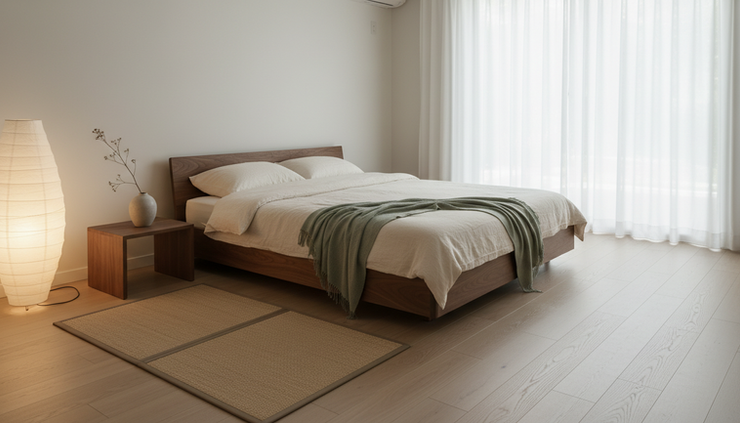
Start with a low platform bed. Add breathable bedding in cotton or linen. Keep the color palette gentle, like warm white, oatmeal, clay, and a darker wood tone.
Then simplify the nightstands. A lamp, a book, and a small dish may be all you need. If you need more nearby, choose nightstands with drawers so the surface stays clear.
Window treatments matter too. Bamboo shades, linen curtains, or layered natural fabrics can soften daylight while adding texture. Avoid heavy, shiny fabrics. They usually feel too formal for Japandi.
For lighting, use several soft sources instead of one bright overhead fixture. A paper lantern, a bedside lamp, and a low floor lamp can make the room feel calm at night.
Keep kitchens and bathrooms simple but warm
Kitchens and bathrooms can be tricky because they need so much function. Japandi handles this well because it values order and usefulness.
In the kitchen, focus on clean cabinet fronts, warm wood, stone-like counters, and open space. If you use open shelving, keep it edited. Display the pieces you reach for daily, like a stack of ceramic bowls, wood cutting boards, or clear glasses.
A Japandi kitchen benefits from:
Flat-front cabinets
Integrated pulls or simple hardware
Warm under-cabinet lighting
Stone, quartz, or concrete-look counters
Wood stools with simple shapes
Hidden appliance storage when possible
Bathrooms can follow the same logic. Use warm neutrals, wood vanities, stone textures, and matte black or brushed metal fixtures. Keep products tucked away in drawers, baskets, or recessed cabinets.
A single stool, a linen towel, and a small ceramic tray can make the space feel finished without crowding it.
Shop slowly and choose pieces with staying power
Japandi works best when the home feels collected, not filled overnight. That can be a relief if you’ve just bought a home and your budget is stretched.
Start with the bones:
Wall color
Flooring or rugs
Main furniture
Lighting
Storage
Then add smaller pieces over time. Look for items made from wood, linen, wool, bamboo, clay, paper, glass, or stone. Vintage and secondhand pieces can work beautifully, especially when they have simple lines and honest materials.
Before buying anything, ask yourself:
Will I still like this in five years?
Does it serve a real purpose?
Is the material natural or at least warm-looking?
Does it make the room feel calmer?
Do I have a clear place for it?
That last question prevents a lot of clutter. Japandi isn’t only a look. It’s a habit of choosing carefully.
Common mistakes that make Japandi feel off
The biggest mistake is making the room too empty. Minimalism still needs comfort. If there’s no rug, no soft lighting, no texture, and nowhere to curl up, the room can feel cold.
The second mistake is using too many pale tones. All-white rooms can look flat fast. Add contrast with walnut, charcoal, blackened wood, or deeper clay colors.
Another common issue is mixing in too many style directions at once. Japandi can handle a rustic stool, a modern sofa, or a vintage ceramic lamp, but it gets muddy when paired with too much glam, industrial metal, or ornate furniture.
Keep these guidelines in mind:
Edit first. Remove before you add.
Warm it up. Use wood, woven texture, and soft lighting.
Let imperfect pieces shine. Handmade items bring soul.
Hide the daily mess. Closed storage is your friend.
Buy less, but choose better. The style depends on restraint.
A calm home starts with one quiet corner
You don’t need to redo the whole house to bring in Japandi style. Start with one corner.
Clear a surface. Add a warm lamp. Place one ceramic vessel or a branch in a simple vase. Swap a busy rug for something woven and natural. Choose bedding in softer tones. Replace a cluttered shelf with closed storage.
Small changes can shift the whole mood of a room.
Japandi is so loved because it gives a home room to breathe. It makes space for comfort, craft, and quiet. For a new home, that’s a strong foundation to build on, one thoughtful choice at a time.


Comments