
Mastering The Art of Interior Design: Mid-Century Modern

A mid-century modern room can look effortless, but the best ones are doing a lot of quiet work. The sofa sits low. The chair legs are slim. The wood feels warm. The windows matter. Nothing looks fussy, yet the space still has personality.
That balance is why this style has stayed popular for decades. It’s clean without feeling cold, retro without feeling like a movie set, and practical enough for real homes with kids, pets, guests, and everyday clutter.
Mid-century Modern Design works especially well for new homeowners because it gives you a clear visual language to follow. Once you understand the shapes, materials, colors, and layout ideas, it becomes much easier to shop, decorate, and avoid buying pieces that fight each other.

Where mid-century modern style came from
Mid-century modern, often shortened to MCM, grew out of post-World War II America. Its strongest period ran from the mid-1940s through the late 1960s, when families were moving into new suburban homes and designers were rethinking how modern life should look.
The style pulled from the German Bauhaus movement and the International Style, both of which favored function, simplicity, and honest materials. Designers weren’t trying to make furniture that looked overly decorated or precious. They wanted pieces that could be made in larger quantities, used comfortably, and still feel beautiful.
Names like Charles and Ray Eames, Eero Saarinen, and Herman Miller are closely tied to this period. Their work helped bring modern design into everyday homes, not just galleries or custom houses.
The big idea was simple: good design should be useful, attractive, and available to more people.
That’s why so much mid-century furniture still feels current. A walnut credenza with sliding doors is still practical. A molded lounge chair still looks sculptural. A round dining table still makes conversation easy. The style was built around living, not just looking.
Why it still feels timeless
Mid-century modern design has a strong point of view, but it doesn’t overwhelm a room. That’s a huge reason it ages so well.
Many styles depend on heavy patterns, ornate details, or very specific trends. MCM relies more on proportion, negative space, natural materials, and purposeful shapes. Those things don’t expire quickly.
You’ll usually see:
Low, horizontal furniture
Tapered peg legs
Warm woods like walnut and teak
Simple silhouettes
Organic curves mixed with crisp lines
Open layouts
Large windows and a connection to nature
A mix of earthy and bold color
The style also plays well with others. You can pair a mid-century sofa with a modern rug, a vintage credenza with contemporary art, or a Saarinen-style table with simple upholstered chairs. It doesn’t demand that every single object in the room match.
That’s helpful when furnishing a first home. You can build the look slowly instead of buying everything at once.
Where mid-century modern is most popular
Mid-century modern has fans all over the world, but it has a special place in the United States. Palm Springs, California, is probably the most famous destination for MCM architecture, with its low-slung homes, desert landscaping, breeze blocks, and dramatic glass walls.
You’ll also see strong mid-century influence in cities like Los Angeles, Chicago, and New York, especially in apartments and homes where people want style without too much visual clutter.
Scandinavia has its own close relationship with the style too. Scandinavian design and mid-century modern share a love of function, craftsmanship, wood, and simple forms. The two aren’t identical, but they overlap beautifully. If you like lighter woods, soft neutrals, and cozy minimalism, a Scandinavian-MCM blend may feel more natural than a bold Palm Springs version.
The good news is that the style doesn’t require a specific type of home. It shines in open floor plans and homes with big windows, but it can also work in smaller rooms when you focus on the right scale.

The furniture pieces that define the look
Mid-century modern furniture is easy to recognize once you know the clues. The pieces usually look light on their feet, even when they’re made from solid wood. That’s because designers often used raised frames, slim arms, open bases, and tapered legs.
The Eames Lounge Chair is one of the most iconic examples. It combines molded plywood, leather, comfort, and serious elegance. It’s the kind of piece that can anchor a reading corner or become the star of a living room.
Of course, you don’t need museum-level originals to get the look. Focus on the design language instead.
Piece | What to look for | How to use it |
Lounge chair | Molded shape, angled back, wood shell, leather or textured fabric | Place it near a window, bookcase, or floor lamp |
Credenza | Long, low profile, sliding doors, warm wood | Use it as media storage, dining storage, or an entry piece |
Coffee table | Kidney shape, oval shape, or simple wood top | Keep it low and leave space around it |
Dining table | Round or oval top, pedestal base, slim legs | Pair it with simple chairs to keep the room open |
Lighting | Sputnik chandeliers, globe lamps, cone shades | Use one statement light rather than several competing fixtures |
The trick is restraint. One or two standout pieces can carry the room. If every item screams “retro,” the space can start to feel themed.
The colors that make it feel warm and playful
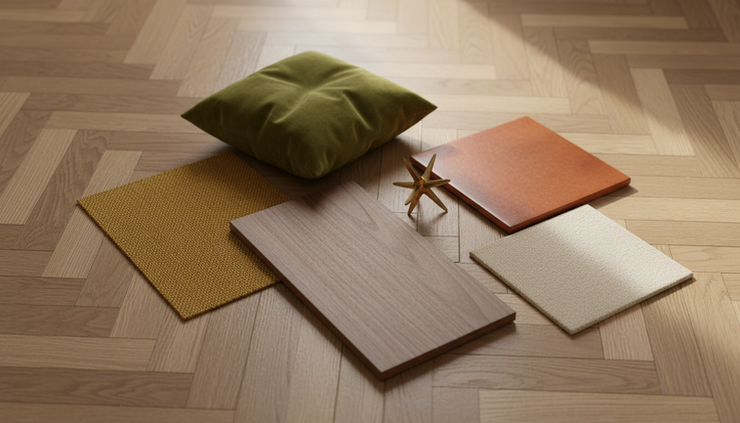
The classic MCM palette mixes earthy tones with bold accents. Think of it as grounded first, playful second.
Common base colors include:
Warm white
Cream
Camel
Olive green
Chocolate brown
Charcoal
Terracotta
Walnut and teak wood tones
Then come the fun colors:
Mustard yellow
Burnt orange
Avocado green
Turquoise
Deep teal
Poppy red
Mustard yellow is especially tied to the look. It works well on throw pillows, a lounge chair, artwork, or a small upholstered bench. Burnt orange and olive green can do the same job if yellow feels too strong.
For a timeless home, keep the largest surfaces calm. Use bolder color on items that are easier to change, like pillows, lamps, rugs, art, and small chairs.
A simple formula works well:
Warm wood + neutral upholstery + one bold accent color + one graphic pattern
That keeps the room interesting without turning it into a time capsule.
How to use mid-century modern style room by room
MCM works best when a home feels open, but not empty. Each room should have breathing space, good light, and furniture that earns its place.
In the living room
Start with the sofa. Look for a low profile, slim arms, and exposed legs. A neutral fabric is usually the safest choice, especially if the sofa is a long-term purchase.
Add a wood coffee table, a textured rug, and one sculptural chair. If the room has a fireplace, built-ins, or large windows, arrange the furniture to highlight that feature instead of pushing everything against the walls.
Keep accessories intentional. A stack of books, a ceramic bowl, and a plant can do more than a dozen tiny objects.
In the dining room
A round or oval table is a classic choice because it softens the straight lines found in a lot of mid-century homes. Pedestal bases also help small dining areas feel less crowded.
For chairs, choose simple shapes with comfort in mind. Wood frames, upholstered seats, or molded shell-style chairs all fit the mood.
A globe pendant or Sputnik-style chandelier can bring the whole room together. Just make sure the light is sized for the table, not the entire room.
In the bedroom
Mid-century bedrooms feel best when they’re calm. Choose a bed with a simple wood frame or a clean upholstered headboard. Add slim nightstands with drawers, a warm rug, and soft bedding.
Avoid too many matching pieces. A full bedroom set can feel flat. Try mixing a walnut bed with painted nightstands, or a vintage dresser with a modern lamp.
In the entryway
This is a great place to bring in MCM style without a major investment. A small bench, a narrow credenza, a round mirror, or a simple wood console can make the entry feel finished.
Add a tray for keys and a hook or two for bags. The style is practical at heart, so storage should look good and work hard.
How to keep it from looking dated
The biggest mistake with mid-century modern style is copying the past too literally. A timeless home should feel inspired by the era, not trapped inside it.
A few simple choices help:
Mix vintage and new pieces
Use bold colors in small doses
Keep walls fresh and simple
Choose real materials when possible
Avoid covering every surface with retro decor
Add modern art or contemporary textiles
Leave open space around furniture
Scale matters too. Many original mid-century homes had lower ceilings and different room proportions than newer houses. If a vintage piece looks too small in a large living room, pair it with a bigger rug, taller plant, or larger art to balance the space.
Comfort matters just as much as looks. Some vintage chairs are beautiful but not great for long movie nights. Sit in pieces before buying when you can, especially sofas, dining chairs, and lounge chairs.
Good Interior Design should make daily life easier. If the room looks amazing but doesn’t support how people actually live, it needs adjusting.
What to buy first
If you’re starting from scratch, don’t try to furnish the whole home in one weekend. Mid-century modern looks better when it feels collected.
Start with the pieces that set the shape of the room:
A clean-lined sofa
Choose neutral fabric, exposed legs, and a low profile.
A wood storage piece
A credenza, dresser, or media console brings warmth and function.
A statement light
Try a globe pendant, tripod floor lamp, or Sputnik-inspired fixture.
One accent chair
This is a good place to use color, leather, or a sculptural shape.
Art with simple geometry
Abstract prints, line drawings, and color-blocked pieces all work well.
If the budget is tight, look for secondhand wood furniture first. Real wood pieces often have more character than cheaper new versions, and small scratches can usually be softened with careful cleaning and conditioning.
Common mistakes to avoid
Mid-century modern is simple, but that doesn’t mean it’s impossible to get wrong. Most mistakes come from going too far in one direction.
A room can feel cold if everything is sleek and neutral. Add texture through wool, boucle, linen, plants, ceramics, and wood grain.
A room can feel kitschy if every item is orange, atomic, or space-age. Choose one playful moment, then let the rest of the room breathe.
A room can feel cluttered if every surface has decor. MCM needs empty space to work. The legs, shadows, and shapes are part of the design.
A room can feel mismatched if the wood tones fight. They don’t need to match perfectly, but they should relate. Walnut, teak, and oak can work together when the undertones feel warm and the finishes aren’t too glossy.
The best version feels relaxed. Clean lines, warm materials, and a few memorable pieces will take you further than a house full of replicas.
FAQ
Is mid-century modern still in style?
Yes. It has stayed popular because the furniture is practical, comfortable, and easy to mix with other styles. The key is using it in a fresh way instead of making the whole room look like a 1960s set.
Can mid-century modern work in a small home?
Definitely. Raised furniture, slim legs, and low profiles can make small rooms feel more open. Choose fewer pieces, keep storage smart, and avoid oversized furniture.
What wood tones are best for mid-century modern furniture?
Walnut and teak are the classics. Oak can also work, especially in lighter Scandinavian-inspired rooms. Warm finishes usually feel more authentic than gray or very dark stained wood.
Do I need vintage furniture to get the look?
No. Vintage pieces add character, but many modern brands make furniture inspired by the same shapes. Mixing old and new often creates the most livable result.
What colors should I avoid?
Avoid using too many bold retro colors at once. Mustard, orange, teal, and avocado green can look great, but they need balance from neutrals, wood, and simple lines.

A timeless home starts with restraint
Mid-century modern style works because it respects both beauty and function. It gives you warm wood, clean lines, playful color, and furniture that feels useful instead of overly precious.
Start with one strong anchor piece. Add natural materials. Keep the layout open. Let color show up in controlled moments. Most of all, leave some breathing room.
That’s how the style stays timeless, not just trendy.


Comments