
Mastering The Art of Interior Design: Minimalist

A minimalist room can look effortless, but it’s rarely accidental. A calm white living room with a low sofa, clean-lined cabinetry, and one beautiful chair takes real choices. The magic is in what’s left out.
That’s why minimalism is so helpful when you’re setting up a new home. It makes rooms feel bigger, cleaner, and easier to live in. It also teaches a useful habit early: every piece should earn its place.
The goal isn’t to strip your home until it feels cold. Good minimalism feels warm, balanced, and intentional. It gives the eye somewhere to rest. It makes daily life feel a little less noisy.

Minimalism started with art, architecture, and a love of space
Minimalist interior design has several roots, but two influences matter most.
The first is the early 20th-century De Stijl art movement. De Stijl favored simple geometry, clean lines, and a reduced visual language. Instead of heavy decoration, it focused on order, balance, and essential forms.
The second influence is traditional Japanese architecture, especially the idea of `Ma`, which refers to the meaningful use of empty space. In a home, that might mean an open wall, a quiet entry, or the pause between furniture pieces. The space around an object becomes part of the design.
Minimalism became especially popular in the late 1980s and 1990s. After decades of ornate furniture, busy patterns, and layered decor, many people wanted something quieter. Homes started to favor clean surfaces, fewer possessions, and architecture that could breathe.
Architect Ludwig Mies van der Rohe captured the spirit of the style with a line that still fits:
“Less is more.”
That phrase doesn’t mean “own nothing.” It means fewer, better, more intentional choices.
Minimalist homes feel bigger because they reduce visual clutter
Rooms don’t only feel small because of square footage. They also feel small when too many things compete for attention.
A crowded media unit, busy shelves, several accent colors, tangled cords, and oversized furniture can make even a decent-sized room feel cramped. The eye has nowhere to land, so the space feels full before it’s actually full.
Minimalist homes fix this by reducing visual noise. Surfaces stay clearer. Furniture has breathing room. Storage is built in or carefully chosen. The room starts to feel wider because the edges, floor, and walls become easier to see.
This matters a lot in starter homes, condos, townhomes, and smaller houses. You might not be able to change the footprint, but you can change how the space reads.
A few choices make a big difference:
Choose lower furniture to keep sight lines open.
Use fewer, larger pieces instead of many small ones.
Leave some wall space empty.
Keep floors as clear as possible.
Let one material or color repeat through the room.
Empty space is not wasted space. In minimalism, empty space is part of the room’s structure. It helps the pieces you do choose feel more important.

Calm comes from fewer decisions and softer contrasts
A calm home isn’t only about color. It’s about how much your brain has to process when you walk into a room.
Minimalist rooms often use a quiet palette, such as warm white, soft gray, beige, sand, cream, black, muted green, or natural wood. That doesn’t mean everything has to match. It means the colors speak at the same volume.
When a room has fewer contrasts, it feels more settled. A cream sofa, oak table, white walls, and woven rug create a soft rhythm. Add a black lamp or dark stone bowl, and the contrast feels intentional instead of chaotic.
Texture does a lot of the heavy lifting here. Without texture, minimalism can look flat. With texture, it feels lived in.
Good minimalist texture can come from:
A wool rug
Linen curtains
Oak or walnut furniture
Bouclé or cotton upholstery
Matte ceramic lamps
Stone trays or bowls
Woven baskets
Plaster, limewash, or softly painted walls
The trick is to keep texture varied but not busy. A room with wood, linen, wool, and ceramic feels warm. A room with every surface glossy, patterned, and high contrast feels louder.
Lighting matters too. Minimalist rooms can feel harsh under one bright ceiling light. Layered lighting softens everything. Try a floor lamp near a sofa, a table lamp on a console, and warm bulbs instead of cool ones. The room will feel calmer at night and more natural during the day.
Minimalism makes daily life easier because it supports routines
A beautiful home still has to handle shoes, mail, chargers, dishes, laundry, pet gear, snacks, keys, and all the little things that appear out of nowhere.
Minimalism works best when it plans for real life. That means storage isn’t an afterthought. It’s part of the design.
A clean entry needs a place for shoes, bags, and keys. A calm kitchen needs clear counters because the toaster, coffee maker, cutting boards, and mail can take over fast. A peaceful bedroom needs closed storage, not just pretty bedding.
This is where minimalist thinking becomes practical. It asks one helpful question over and over:
Where does this live?
If something doesn’t have a home, it becomes clutter. If every daily item has a simple place to go, the room is easier to reset.
Open shelving looks light, but it needs editing often.
Small decor can add personality, but too much feels scattered.
Extra furniture may seem useful at first.
Closed cabinets hide daily mess and keep the room calmer.
One larger piece often feels more confident and easier to clean around.
Fewer pieces give traffic paths more space and make cleaning faster.
Minimalism isn’t about pretending life is spotless. It’s about making cleanup easier. When there’s less to move, dust, sort, and step around, your home takes less effort to maintain.

The best minimalist rooms still have personality
One of the biggest mistakes people make with minimalism is removing anything that feels personal. The result can feel like a showroom, clean but lifeless.
A good minimalist home still has character. It just doesn’t rely on piles of stuff to create it.
Personality can come from one great chair, a handmade bowl, a favorite art piece, books arranged with space around them, or a vintage wood table. In a minimalist room, these pieces stand out more because they aren’t fighting for attention.
This is especially useful when furnishing a first home. It’s tempting to fill every wall and corner right away. Empty space can feel unfinished. But waiting often leads to better choices. Live in the home for a bit. Notice where light falls. Notice where you actually sit. Notice which corners need storage and which ones should stay open.
A slower approach also helps avoid the “everything bought in one weekend” look. Minimalist Design works best when the room feels collected, not copied.
Try this simple rule when adding decor: if a piece doesn’t add beauty, comfort, function, or meaning, skip it for now.
That doesn’t mean your home has to be plain. It means each item gets room to matter.
Minimalism works room by room, not all at once
You don’t need to redo an entire house to get the benefits. Start with one room, then carry the same thinking into the next.
The living room is usually the easiest place to begin because it has the most visible clutter. Clear the surfaces, remove extra side tables, hide cords, and leave space around the sofa. Once the room feels better, pay attention to what you actually miss. Often, it’s less than expected.
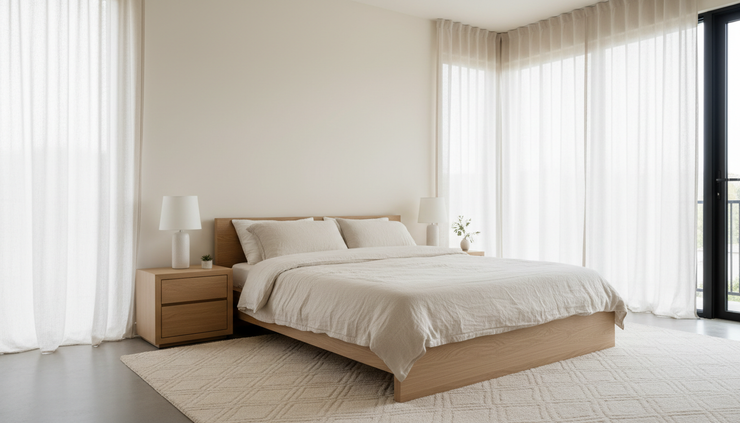
In the bedroom, focus on rest. Keep the nightstands simple. Use closed storage where possible. Choose bedding with texture rather than busy patterns. A calm bedroom doesn’t need much to feel complete.
In the kitchen, prioritize counter space. Store appliances you don’t use daily. Keep one tray for oil, salt, or coffee items if they need to stay out. Repetition helps here, such as matching containers, simple cabinet hardware, or a consistent metal finish.
Bathrooms benefit from the same idea. Fewer bottles on display make the room feel cleaner right away. Use drawers, baskets, or a medicine cabinet so the counter can stay open.
Across the whole home, the pattern is the same: reduce, refine, then add back only what improves the room.
Warm minimalism is usually the most livable version
Pure white minimalism can look stunning in photos. In real homes, it can feel unforgiving. Warm minimalism is easier to live with.
Warm minimalism uses the same clean lines and open space, but adds softness through materials, lighting, and natural tones. Think warm white walls instead of stark white, wood instead of all metal, linen instead of shiny synthetic fabric, and soft rugs instead of bare floors everywhere.
This approach works across many home styles in the US, from new-build suburbs to city apartments to renovated ranch homes. It also blends well with other styles. You can mix minimalism with Scandinavian, Japanese-inspired, modern farmhouse, midcentury, or contemporary Interior Design without losing the calm feeling.
The key is restraint. Let one style lead, then borrow carefully from the others.
A warm minimalist room might include:
A clean-lined sofa in a textured neutral fabric
A wood coffee table with visible grain
One large artwork instead of a gallery wall
Soft white walls
A wool or jute rug
A few black accents for depth
Plants with simple shapes
Plants are worth mentioning because they bring life into quiet rooms. One tall olive tree, rubber plant, or snake plant can do more than several tiny pots scattered around. Scale matters.
FAQ
Is minimalism good for small homes?
Yes. Minimalism can make a small home feel larger because it reduces visual clutter and keeps walkways open. The biggest wins usually come from clear floors, closed storage, lower furniture, and fewer small decorative pieces.
Does a minimalist home have to be white?
No. White is common, but it’s not required. Soft neutrals, warm wood, muted greens, clay tones, charcoal, and black can all work. The palette just needs to feel controlled and balanced.
How do I make minimalism feel cozy?
Use texture, warm lighting, natural materials, and comfortable furniture. A wool rug, linen curtains, wood table, soft throw, and warm bulbs can make a simple room feel inviting instead of cold.
What should I buy first for a minimalist living room?
Start with the main pieces: sofa, rug, coffee table, lighting, and storage. Choose those carefully before adding decor. Once the room works, add art, plants, and objects with meaning.
Can families live realistically with minimalism?
Yes, but storage matters. Family minimalism doesn’t mean empty rooms. It means fewer duplicates, easy cleanup systems, durable materials, and clear places for everyday items.
A calmer home starts with one edit
Minimalist homes feel bigger because they give space back to the room. They feel calmer because fewer things compete for attention. They’re easier to live in because daily items have somewhere to go.
Start small. Clear one surface. Remove one piece of furniture that blocks movement. Leave one wall empty. Buy the better lamp instead of three fillers. Give your favorite chair enough space to be seen.
That’s the real strength of minimalism. It doesn’t ask a home to be empty. It asks every choice to be thoughtful.


Comments