
Mastering The Art of Interior Design: Traditional Design

A traditional room should feel like it’s been loved for generations, even if the furniture arrived last week.
That’s the real charm of traditional interior design. It gives a home structure, warmth, and polish without chasing trends. Think balanced furniture layouts, carved wood pieces, rich fabrics, classic colors, and architectural details that make a room feel finished.
Traditional style is especially helpful when a new home feels blank or a little too builder-basic. It brings in character fast. It also works beautifully in older homes, where crown molding, formal dining rooms, staircases, and built-ins already set the stage.

What makes traditional design feel timeless
Traditional design has deep roots in 18th and 19th-century European decor, with strong influence from England and France. You’ll see traces of Georgian, Neoclassical, Colonial, and French country ideas mixed into the style.
The goal isn’t to copy a museum room. A good traditional home feels comfortable, not frozen in time. It uses classic shapes, rich materials, and a sense of order to create rooms that feel grounded.
A few things usually define the look:
Symmetry
Matching lamps, paired chairs, centered artwork, and balanced furniture placement make the room feel calm.
Classic architecture
Crown molding, chair rails, wainscoting, built-in bookcases, fireplace mantels, and paneled doors all support the style.
Curved and carved furniture
Traditional furniture often has turned legs, rolled arms, cabriole legs, tufting, nailhead trim, and graceful silhouettes.
Warm, rich colors
Navy, hunter green, burgundy, camel, gold, cream, taupe, and soft beige all fit naturally.
Polished wood
Mahogany, cherry, walnut, maple, and other darker woods add depth and weight.
If your goal is to Design Traditional interiors, start with balance and proportion before shopping for accessories. The room should feel settled first, then decorated.
Start with rooms that have a clear purpose
Traditional design works best when each room has a defined role. That’s why it shines in historic homes, suburban houses, estates, and classic East Coast layouts with separate dining rooms, parlors, libraries, and formal entries.
Open-concept homes can still use traditional style, but they need careful zoning. Without some separation, the look can feel scattered.
The easiest rooms to design in a traditional way are:
Formal living rooms
Dining rooms
Primary bedrooms
Home libraries
Entry halls
Powder rooms
Bathrooms with vintage-inspired fixtures
A traditional room doesn’t need to be stiff. A living room can still be the place where someone kicks off their shoes and watches a movie. The key is giving every major piece a sense of purpose.
For example, in a living room, place the sofa across from the fireplace or main focal point. Add two chairs facing the sofa. Use a substantial coffee table in the center. Then anchor the layout with a rug large enough for at least the front legs of the seating to rest on it.
That one setup already says “traditional” because it feels intentional.
Build the room around symmetry
Symmetry is one of the easiest ways to make a traditional space feel elegant.
You don’t need two of everything, but paired pieces help. Matching table lamps on either side of a sofa, twin sconces flanking a mirror, or a pair of armchairs across from a fireplace can change the whole mood of a room.
Try this simple formula for a living room:
Choose a central focal point, like a fireplace, window, or large cabinet.
Place the main sofa directly across from it or parallel to it.
Add a pair of chairs, matching if possible.
Use side tables of similar height.
Hang one strong piece of art or an ornate mirror centered on the wall.
Finish with matching lamps, balanced pillows, or framed prints.
This approach works in bedrooms too. A bed centered on the main wall, matching nightstands, traditional lamps, and a bench at the foot of the bed create instant order.
Symmetry doesn’t mean the room has to look rigid. You can mix accessories, vary pillow patterns, or use slightly different antique pieces. Just keep the visual weight balanced.

Choose furniture with lasting shape and substance
Traditional furniture has presence. It usually looks sturdy, detailed, and a little formal, but it should still be comfortable.
Look for pieces like:
Tufted Chesterfield sofas
Wingback chairs
Roll-arm sofas
Camelback sofas
Cabriole-leg side tables
Four-poster or sleigh beds
China cabinets
Secretary desks
Clawfoot tubs
Upholstered dining chairs
Heavy dining tables with carved legs
A traditional space can handle larger furniture better than many modern styles. A thick-legged dining table, tall bookcase, or deep sofa feels right because the style values permanence.
That said, scale still matters. In a smaller home, skip oversized furniture that blocks walkways. Choose traditional shapes in slimmer profiles. A small roll-arm loveseat, narrow chest, or petite wingback chair can give the same feeling without crowding the room.
Mix antiques with newer pieces
You don’t have to fill a house with expensive antiques. In fact, mixing old and new usually feels more livable.
A newer sofa can sit beside an antique side table. A reproduction dining table can work with vintage chairs. A modern mattress can sit inside a classic four-poster frame. The goal is a collected feel, not a showroom set.
A good rule is to choose one or two standout pieces per room. Let them carry the traditional character.
Strong candidates include:
An antique mirror over the fireplace
A carved wood dining table
A crystal or brass chandelier
A dark wood dresser
A tufted leather sofa
A built-in or freestanding bookcase
Once the anchor pieces are in place, simpler supporting items can fade into the background.
Use a rich color palette without making the room heavy
Traditional rooms often use warm, subdued colors. These colors feel grown-up and lasting, but they can get too dark if every surface is saturated.
Classic traditional colors include:
Color family | Where it works well |
Navy blue | Sofas, dining rooms, accent walls, drapery |
Hunter green | Libraries, powder rooms, upholstery, painted cabinets |
Burgundy | Rugs, pillows, art, dining rooms |
Warm gold | Frames, lamps, trim accents, upholstery details |
Cream and ivory | Walls, ceilings, bedding, drapery |
Soft beige and taupe | Sofas, rugs, wall color, large upholstered pieces |
The trick is balance. If you choose a deep navy sofa, keep the walls soft cream or warm beige. If the dining room walls are burgundy, use lighter artwork, pale trim, and reflective finishes to brighten the space.
You can also bring in traditional color through textiles instead of paint. Persian-style rugs, plaid pillows, damask curtains, embroidered cushions, and floral upholstery all add richness.
Patterns are welcome here. Traditional rooms often layer several of them, but they share a related palette. A floral chair, striped curtains, and patterned rug can work together if they repeat the same navy, cream, green, or red tones.

Let dark wood bring depth
Dark polished wood is one of the strongest signals of traditional style. Mahogany, cherry, walnut, and maple show up often because they bring warmth and visual weight.
Use wood in places where it can really shine:
Dining tables
Bed frames
Built-in bookcases
Fireplace mantels
Console tables
Dressers and chests
Stair railings
Cabinetry
Picture frames
If a room starts to feel too dark, don’t remove all the wood. Instead, add contrast. Cream walls, pale upholstery, lighter rugs, glass lamps, and metallic accents can keep the space from feeling closed in.
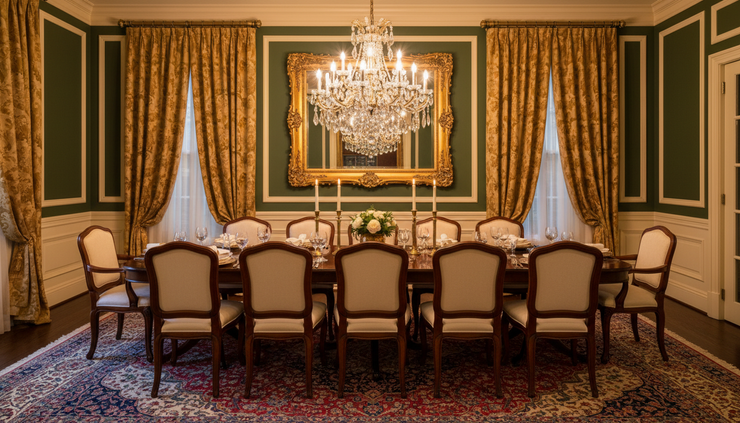
A dark wood dining table, for example, looks beautiful with ivory upholstered chairs, a brass chandelier, white candles, and a patterned rug with touches of blue or red. The wood stays formal, but the room still feels inviting.
Wood finishes don’t have to match perfectly. A walnut sideboard can sit near cherry chairs as long as the undertones feel compatible. Try to keep the level of formality consistent. A rough rustic plank table may fight with a polished mahogany cabinet, while a refined antique table will feel more at home.
Add architectural details where you can
Traditional style loves architecture. If the house already has crown molding, paneled doors, wainscoting, ceiling medallions, or built-ins, highlight them.
If the home is newer or plain, you can still add character over time.
Some upgrades make a big difference:
Crown molding in the living room or dining room
Picture frame molding on flat walls
Wainscoting in an entry, hallway, or dining room
A more detailed fireplace mantel
Built-in bookcases around a fireplace
A ceiling medallion above a chandelier
Heavier baseboards and door casings
These details do more than decorate the room. They create the structure traditional design needs.
For a budget-friendly start, focus on one high-impact room. A dining room with picture molding, classic paint, a chandelier, and lined drapery can feel completely transformed.
Dress the windows like they matter
Window treatments are a major part of traditional design. Bare windows can make a traditional room feel unfinished.
Heavy, floor-to-ceiling drapery gives height and softness. It also frames the windows, which helps with symmetry. Linen, velvet, damask, silk-look blends, and lined cotton can all work depending on the room.
For a classic look:
Hang curtain rods higher than the window trim.
Let panels touch or slightly break at the floor.
Use substantial rods in brass, bronze, or dark wood.
Choose pleated panels for a tailored look.
Layer shades underneath if privacy matters.
This is one of those Interior Design choices that affects the whole room. Drapery can make ceilings feel taller, add warmth, improve acoustics, and pull the color palette together.
Bring in lighting that feels classic
Traditional lighting should feel warm and layered. One ceiling fixture isn’t enough.
A typical room might include:
A chandelier or pendant
Table lamps
Floor lamps
Wall sconces
Picture lights
Candlelight for dining or entertaining
Chandeliers are especially important in dining rooms, entries, and bedrooms. Crystal, brass, bronze, and antique-inspired finishes all fit the style. The fixture should feel special, but not so large that it overwhelms the room.
Table lamps also carry a lot of the look. Try ceramic lamps, brass lamps, urn-shaped bases, pleated shades, or lamps with dark wood details. Place them in pairs when the room calls for balance.
Warm white bulbs usually look best. Traditional rooms depend on cozy light, not harsh brightness.
Finish with mirrors, art, and collected details
Accessories make traditional design feel personal. This is where the room moves from “nice furniture” to “someone actually lives here.”
Good finishing pieces include:
Ornate mirrors
Framed landscapes
Botanical prints
Oil-style portraits
Stacked books
Blue and white porcelain
Brass candlesticks
Silver trays
Ceramic bowls
Taper candles
Classic clocks
Framed family photos
Keep surfaces styled, but not packed. A traditional room can handle layers, yet clutter quickly breaks the sense of order.
A console table might need only a mirror, two lamps, and a small bowl. A mantel could hold a central mirror, candlesticks, and a few framed pieces leaning casually. A bookcase can mix books, pottery, framed photos, and small antique finds.
The best traditional rooms feel collected over time. Even if everything is new, try to avoid buying every accessory from the same aisle on the same day.
Make traditional style feel fresh, not fussy
The biggest mistake with traditional design is going too far into formality. Too many heavy pieces, dark colors, ornate patterns, and polished surfaces can make a home feel stiff.
To keep it fresh, leave room to breathe.
Try these updates:
Use lighter wall colors with dark furniture.
Choose one statement antique instead of five.
Mix in clean-lined upholstery with traditional tables.
Keep window treatments tailored, not overly puddled.
Use classic patterns in smaller doses.
Add fresh flowers or greenery.
Leave some surfaces simple.
Use comfortable seating, not just beautiful seating.
Traditional design should make daily life feel more gracious, not more fragile. The sofa should invite people to sit. The dining room should welcome a weeknight meal, not wait all year for a holiday.
A simple room-by-room starting plan
If the whole house feels overwhelming, start with one room at a time.
For the living room, focus on the sofa, chairs, rug, coffee table, lamps, and a central mirror or artwork. Get the layout right before buying smaller decor.
For the dining room, choose the table first. Add comfortable chairs, a chandelier, a rug, and drapery. This room can handle richer colors than casual spaces.
For the bedroom, center the bed, add matching nightstands, use soft layers, and bring in a bench or small chair if space allows.
For the entry, use a console table, mirror, lamp, runner, and small dish for keys. It sets the tone for the rest of the home.
For the bathroom, try traditional touches like a framed mirror, polished nickel or brass hardware, classic sconces, marble-look surfaces, or a clawfoot tub if the room and budget allow.
The takeaway for a timeless traditional home
Traditional interior design works because it values things that age well: balance, comfort, craft, and detail. It doesn’t need to feel old-fashioned. It just needs to feel considered.
Start with symmetry. Choose a few strong furniture pieces. Bring in warm color, dark wood, layered lighting, and classic textiles. Then add architectural detail and personal pieces over time.
A timeless traditional home rarely happens in one shopping trip, and that’s part of its appeal. Let it grow piece by piece, and it’ll feel more natural, more comfortable, and far more elegant.


Comments