
Mastering The Art of Interior Design: Transitional Design

A timeless home usually doesn’t scream for attention. It feels calm, comfortable, and pulled together without looking like a showroom. That’s exactly why transitional style has become such a favorite, especially in new homes, remodels, and spaces where one person loves classic details and someone else wants cleaner, simpler lines.
Transitional design sits between traditional and contemporary style. It borrows the graceful shapes and sense of comfort from traditional interiors, then pares them back with cleaner silhouettes, softer color palettes, and less ornament. The result feels current without chasing trends.
It’s polished, but not fussy. Warm, but not rustic. Elegant, but still easy to live in.

Where transitional style came from
Transitional style became popular in the late 20th century as homeowners started moving away from two extremes.
On one side, pure modernism could feel too stark for everyday family life. On the other, traditional decor could feel heavy, formal, and overly detailed. Think carved furniture, dark rooms, ornate fabrics, and a lot of visual weight.
Transitional style offered a middle path.
It kept what people still loved about traditional homes, such as symmetry, comfort, quality materials, and classic furniture shapes. Then it removed the extra decoration and paired those shapes with contemporary colors, cleaner lines, and lighter finishes.
That’s why it works so well in real homes. It doesn’t ask every piece to belong to one strict design era. A rolled-arm sofa can sit near a sleek console. A classic mold-framed fireplace can work with simple linen drapes. A warm walnut table can balance crisp white walls.
The goal is balance, not matching.
Why transitional interiors are so popular now
There’s a reason transitional style shows up in so many homes across North America. It has wide appeal, and that matters when decorating a new build, staging a home for sale, or updating a space that needs to last.
It’s also flexible. A transitional room can lean a little more classic or a little more modern depending on the architecture, furniture, and finishes.
For new homeowners, that flexibility is gold. Most people don’t move into a blank slate with every piece figured out. There are hand-me-downs, first big furniture purchases, existing tile, builder-grade cabinets, and maybe a dining table that has survived three moves. Transitional style gives all of that a place to land, as long as the choices feel edited and connected.
It’s especially helpful when two tastes need to meet in the middle. One person might want clean-lined furniture and minimal decor. Another might love soft fabrics, classic lamps, and a cozy layered room. Transitional style makes space for both, without making the home feel split in half.
It also tends to age well. Very trendy rooms can feel dated fast because they rely on a specific color, shape, or finish of the moment. Transitional interiors usually stick with quieter foundations, then use smaller pieces for personality.
The color palette is calm on purpose
The first thing most people notice about a transitional home is the color palette. It’s usually soft, neutral, and easy on the eyes.
That doesn’t mean boring. It means the room creates interest through shape, fabric, wood tone, and contrast rather than loud color.
Common transitional colors include:
Warm white Softer than stark gallery white, great for walls, trim, and upholstery.
Cream A cozy neutral that works well with wood and natural fiber rugs.
Taupe One of the most useful transitional colors because it bridges gray and beige.
Soft gray Best when it has a warm undertone, so the room doesn’t feel cold.
Muted blue or green Ideal for pillows, artwork, rugs, or a quiet painted vanity.
Charcoal Useful in small doses for contrast, such as lamps, window frames, or accent chairs.
The trick is to choose neutrals with similar undertones. A very cool gray sofa can look off beside creamy white walls and warm oak floors. A yellow beige rug can fight with a blue-gray wall color. Transitional rooms look best when everything feels like it belongs to the same temperature family.
If the home already has fixed finishes, start there. Flooring, cabinets, countertops, tile, and fireplace stone usually set the direction. Paint and upholstery should support those finishes, not compete with them.

Furniture should feel tailored and comfortable
Furniture is where transitional style really earns its keep. The shapes are refined, but they don’t look stiff.
Look for pieces that have clean outlines, good proportions, and a sense of comfort. A transitional sofa might have track arms, a low rolled arm, or a simple skirt. Chairs often have generous seats, soft upholstery, and subtle curves. Tables are usually simple and well-scaled, with enough warmth to keep the room from feeling flat.
Good transitional furniture often includes:
Streamlined sofas with track arms or tailored skirts
Oversized upholstered club chairs
Sleek console tables in walnut, oak, metal, or painted wood
Coffee tables with simple shapes and warm finishes
Dining chairs with upholstered seats and clean backs
Beds with panel, wingback, or gently curved upholstered headboards
Scale matters more than decoration. Instead of relying on carved legs, nailhead trim, or heavy pattern, transitional rooms use proportion and material to create interest.
A simple sofa can look high-end if the fabric has depth, the cushions are full, and the room around it is balanced. A plain dining table can feel elegant with the right chairs, lighting, and rug.
One helpful rule is to mix straight lines with soft shapes. If the sofa has square arms, try a round coffee table. If the dining table is rectangular, bring in curved-back chairs. If the room has lots of sharp architecture, soften it with drapes, a plush rug, or an upholstered bench.
Texture does the heavy lifting
Because transitional interiors tend to use quiet colors, texture becomes the star. This is what keeps warm white, taupe, cream, and gray rooms from feeling flat.
A successful space might layer five or six textures without using much pattern at all.
Think about:
Chenille upholstery
Bouclé pillows or chairs
Linen drapery
Wool or wool-blend rugs
Woven baskets
Velvet accent pillows
Leather ottomans
Ceramic lamps
Stone bowls or trays
Grasscloth wallpaper
Texture gives the eye somewhere to go. It also makes a room feel inviting. A smooth leather chair beside a nubby wool rug and a matte ceramic lamp feels richer than a room full of the same flat fabric.
This is one of the biggest differences between a room that looks “builder basic” and one that feels finished. The colors may be almost identical, but the textures tell a better story.
A good test is to imagine the room in black and white. If it still looks interesting because of contrast, shape, and material, the design is probably on the right track.

Wood tones should bridge light and dark
Wood is a major part of transitional style, but it usually avoids extremes. Very dark espresso finishes can feel too heavy. Very pale, raw woods can push the room toward Scandinavian or beachy. Transitional spaces often sit in the middle.
Warm walnut, white oak, and lightly stained maple all work beautifully. They bring warmth without making the home feel old-fashioned or too rustic.
Mid-tone woods are especially useful in open-concept homes, where one finish needs to work across the kitchen, dining area, and living room. A walnut console can ground a light living room. White oak floors can soften painted cabinetry. A maple dining table can keep the room casual but still polished.
The key is not using too many competing wood tones. They don’t need to match perfectly, but they should relate.
A simple way to manage wood tones:
Choose one main wood tone for the room
Add one supporting wood tone
Repeat each tone at least once
Watch the undertones
Floors, cabinets, or the largest furniture piece usually set the base
A coffee table, console, or dining chair can bring contrast
Repetition makes the mix feel intentional
Warm woods usually pair best with other warm or neutral woods
Metal finishes can help connect wood tones too. Brushed brass warms up gray and white rooms. Matte black adds definition. Polished nickel feels classic but still fresh. For a transitional home, it’s better to repeat two metal finishes thoughtfully than to scatter five different ones around the house.
How to use transitional style room by room
Transitional style works across the whole home, but each room needs a slightly different approach.
Living rooms should feel relaxed but refined
Start with comfortable seating. A sofa with clean arms, two upholstered chairs, and a simple coffee table can do more than a room full of accent furniture. Add a large rug to anchor the space, then layer pillows in solid textures and subtle patterns.
Keep the layout conversational. Transitional rooms usually work best with symmetry or near-symmetry, such as matching lamps, paired chairs, or balanced art. That sense of order makes the room feel calm.
Kitchens should balance classic and clean
A transitional kitchen often includes shaker or flat-panel cabinets, simple hardware, stone or quartz countertops, and lighting with a classic shape. White, greige, navy, warm gray, and soft wood finishes all fit.
If the cabinets are very simple, choose pendants with a little curve or warmth. If the cabinets have more traditional detail, keep the hardware and counter surfaces cleaner.
This is where Interior Design choices need to work hard because kitchens have so many fixed elements. Cabinet profile, countertop edge, backsplash tile, faucet finish, and lighting all need to speak the same language.
Bedrooms should stay soft and uncluttered
A transitional bedroom doesn’t need much to feel finished. An upholstered bed, layered bedding, two solid nightstands, good lamps, and simple window treatments can be enough.
Use texture instead of busy color. A quilted coverlet, linen duvet, bouclé bench, or wool rug adds comfort without visual clutter.
Dining rooms can lean a little more formal
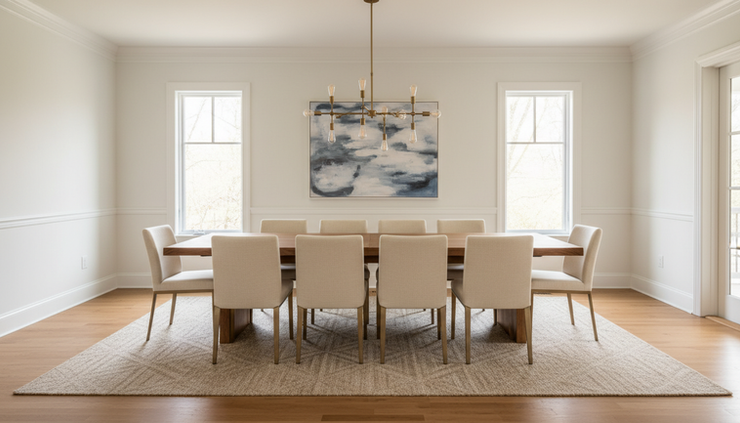
Dining rooms are a great place to bring in a classic shape. A pedestal table, upholstered chairs, or a statement chandelier can feel elegant without going too traditional.
If the table is wood, keep the chairs lighter or upholstered. If the chairs are dark, soften the room with a pale rug or warm wall color.
Bathrooms should feel clean, not cold
A transitional bathroom often includes a simple vanity, framed mirrors, stone-look surfaces, and warm metal accents. White tile can work well, but pair it with texture or wood so the space doesn’t feel sterile.
A walnut vanity, soft brass sconces, or a woven shade can make a clean bathroom feel warmer.
The best transitional accents are quiet but intentional
Accessories in transitional rooms should feel edited. This isn’t the style for cluttered shelves packed with tiny objects. A few larger pieces usually look better than many small ones.
Good accents include:
Large framed artwork with soft color
Ceramic or stone vases
Simple table lamps with linen shades
Woven trays
Sculptural bowls
Oversized mirrors
Solid or subtly patterned pillows
Natural fiber or wool rugs
Patterns should feel controlled. Stripes, small geometrics, soft florals, and tone-on-tone patterns work well. High-contrast prints can work too, but they should be used carefully so they don’t take over the room.
If a room feels too plain, don’t rush to add color first. Try adding a darker lamp, a chunkier rug, linen curtains, or a warmer wood piece. Transitional style often needs more depth, not more stuff.
Common mistakes that make transitional rooms fall flat
Transitional style looks simple, but that simplicity can be tricky. Without enough contrast or texture, a room can turn bland fast.
Watch out for these common missteps.
Everything is the same shade of beige
A neutral palette still needs range. Try mixing cream, taupe, warm gray, ivory, and a small amount of charcoal or muted color. Even a quiet room needs light, medium, and dark values.
The furniture is too bulky
Comfort matters, but oversized furniture can make a room feel heavy. Look for generous seating with cleaner arms and better proportions. A deep sofa can still have a crisp outline.
The room has no personal pieces
Transitional doesn’t mean anonymous. Family photos, travel finds, inherited furniture, and meaningful art can all belong. The trick is giving them breathing room and pairing them with cleaner elements.
The lighting is an afterthought
One ceiling fixture won’t carry a whole room. Use layers. Add table lamps, floor lamps, sconces, and dimmers where possible. Soft lighting makes neutral rooms feel much richer at night.
The style gets too perfect
A home should still feel lived in. A vintage stool, a handmade bowl, or a slightly worn leather chair can keep a transitional room from feeling too polished.
A simple way to start if the home feels unfinished
If the home is new, recently purchased, or halfway decorated, don’t try to fix every room at once. Start with the main living area because that’s where the style will set the tone.
Try this order:
Pick the main neutral palette based on fixed finishes.
Choose one comfortable anchor piece, like a sofa or dining table.
Add a rug large enough to connect the furniture.
Bring in one warm wood tone.
Layer two or three tactile fabrics.
Add lighting at different heights.
Finish with fewer, larger accessories.
That sequence keeps the room grounded. It also helps avoid random purchases that look good in a store but don’t work together at home.
Transitional style is forgiving, but it still benefits from editing. Before buying something, ask whether it adds comfort, texture, warmth, contrast, or function. If it doesn’t add at least one of those, it may just become clutter.
The takeaway for a timeless home
Transitional style works because it respects both sides of good design. It has the comfort and grace of traditional rooms, plus the lighter touch and cleaner lines of contemporary living.
For a timeless home, focus on warm neutrals, tailored furniture, mid-tone woods, layered textures, and pieces that feel comfortable without being overly casual. Keep the palette calm, but don’t forget contrast. Keep the furniture simple, but don’t let the space feel empty.
The best transitional rooms don’t look like they were decorated all at once. They feel collected, balanced, and easy to live in. That’s the real win.


Comments