
Moody Elegance for Open Concept Living Design Ideas

Open-concept rooms can feel impressive and impersonal at the same time. The tall ceilings, long sightlines, and wall-to-wall windows that make a home feel expansive can also leave it feeling exposed, echoing, or unfinished. Moody elegance solves that problem with depth, contrast, and scale.
Instead of relying on white walls and pale furniture to make a space feel bigger, this look does the opposite. It wraps the room in richer tones, adds tactile materials, and uses substantial pieces that can hold their own against grand architecture. The result is open living that still feels intimate.

Moody elegance starts with depth, not darkness
A moody room should feel layered, not dim. Dark colors work best when they add structure and contrast. In an open-concept layout, this means using deep shades to define zones, frame architectural features, and create visual weight.
Good foundational colors include:
Charcoal gray
A strong choice for walls, built-ins, fireplace surrounds, and cabinetry.
Deep navy
Rich and classic, especially when paired with brass, walnut, cream, or black marble.
Espresso and dark walnut
Useful for floors, ceiling beams, shelving, and large furniture frames.
Blackened green
Sophisticated without feeling stark, especially in homes with natural views.
The key is balance. A room with dark walls, a dark sofa, dark floors, and poor lighting can feel flat. A room with dark walls, a pale rug, veined stone, warm lamps, and reflective accents feels intentional.
Think of darkness as a backdrop. It lets texture, shape, artwork, and light stand out.
Use layout to create rooms without walls
Open-concept design depends on invisible boundaries. Without walls, the furniture must tell people where to gather, where to walk, and where each zone begins.
Start with the largest area first, usually the living space. A massive sectional or pair of facing sofas can anchor the room. Float the seating away from the walls instead of pushing it to the edges. This creates a defined lounge area while keeping movement open around it.
A strong layout often includes:
A large sectional facing a fireplace, view, or media wall
A substantial coffee table that matches the scale of the seating
Lounge chairs angled inward to soften the geometry
A console or low cabinet behind the sofa to create a gentle divider
Clear walkways between the kitchen, dining area, and living zone
For the kitchen, a large island can act as a bridge. It connects the practical side of the room with the social side. Choose a stone with strong veining, dark cabinetry, or pendant lights with sculptural presence so the island feels like part of the design, not just a work surface.

Build contrast through texture
Moody elegance relies on touch as much as color. In a large open room, flat surfaces can quickly feel cold. Texture brings the space back to a human scale.
Pair soft and hard materials on purpose. A velvet sofa next to a polished marble table creates contrast. Dark wood beside plaster walls adds warmth. A wool rug under leather chairs absorbs sound and softens the floor plane.
Some reliable texture pairings include:
Velvet upholstery
Bouclé or wool
Dark walnut
Leather
Matte walls
High-gloss stone
Smoked glass
Brushed brass
Linen drapery
Polished metal accents
Rugs matter more in open-concept rooms than many people expect. They define each zone and help with acoustics. In a large living area, the rug should be big enough that at least the front legs of all major seating pieces sit on it. If the room is especially grand, go larger rather than smaller. A tiny rug makes the furniture feel adrift.
Window treatments also add softness. Floor-to-ceiling drapery in a heavy linen, velvet, or wool blend can frame sweeping views without blocking them. Choose a tone close to the wall color for a wrapped, elegant effect, or use a warmer neutral to lighten the space.
Choose lighting that creates atmosphere
Lighting makes the difference between elegant and gloomy. Open-concept rooms need several layers because one overhead fixture cannot do all the work.
Start with ambient lighting. Recessed lights, cove lighting, or a central chandelier can provide general illumination. Keep the color temperature warm, especially with dark finishes. Cool bulbs can make charcoal, navy, and black surfaces feel harsh.
Next, add task lighting where activities happen. The kitchen island needs pendants or focused ceiling lights. A reading chair needs a floor lamp. A bar or serving area benefits from under-shelf lighting.
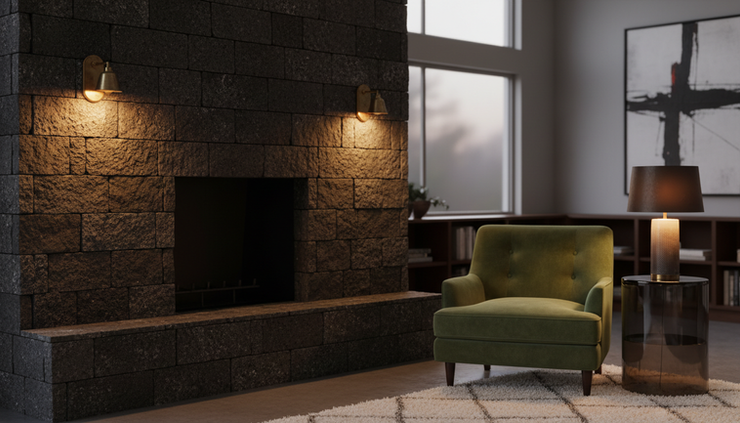
Then add accent lighting. This is where moody rooms come alive. Use picture lights over artwork, sconces beside a fireplace, LED strips inside shelves, or small lamps on consoles. These pockets of glow create movement through the room.
A successful moody room should look good with every light on, but it should look even better when only the accent lights are glowing.
Dimmer switches are essential. They let the room shift from bright and functional during the day to soft and intimate at night.
Let furniture match the scale of the architecture
Small furniture can make a big room feel awkward. Moody elegance works best with pieces that have presence. Look for generous proportions, deep cushions, broad arms, and strong silhouettes.
A large sectional is often the right choice, especially in a room built for entertaining. If the space is very wide, two sofas facing each other may feel more refined. Add substantial lounge chairs rather than delicate accent chairs. Choose a coffee table with visual weight, such as stone, dark wood, or a large upholstered ottoman.
Dining furniture should feel equally considered. A long dark wood table, upholstered dining chairs, and a low chandelier can create a warm gathering place within the open layout. If the dining area sits between the kitchen and living room, use lighting and a rug to give it its own identity.
Built-ins also help. Dark shelving, a full-height wine wall, or custom cabinetry can make an open space feel tailored. Keep styling restrained. A few large sculptural objects, oversized books, ceramics, and framed art will look better than many small accessories.
Keep the room luminous with reflection
Dark rooms need light play. Reflection keeps moody spaces from feeling heavy.
Use materials that catch and bounce light in controlled ways:
Veined marble or quartzite
Antiqued mirror
Smoked glass
Brass, bronze, or nickel
Satin lacquer
Polished plaster
Glossy ceramic tile
The goal is not sparkle everywhere. Too many shiny finishes can cheapen the look. Instead, choose a few moments. A marble island. A mirror behind a bar. A brass floor lamp beside a charcoal sofa. These reflective details lift the palette and add sophistication.
Artwork can do the same. Large-scale art with pale tones, metallic touches, or strong contrast breaks up dark walls and gives the eye a place to rest.

Bring the whole palette together
A moody open-concept room should feel continuous from one zone to the next. Repeat materials so the kitchen, dining area, and living room speak the same design language.
Try a simple formula:
One deep anchor color
One warm wood tone
One light neutral for relief
One metal finish
One stone or high-contrast surface
Two or three tactile fabrics
For example, charcoal walls, walnut cabinetry, cream rugs, aged brass accents, black marble, velvet, and linen can carry through the full space without feeling repetitive.
Moody elegance works because it respects the size of an open concept while giving it intimacy. Use deep color to ground the room, texture to soften it, lighting to shape the mood, and furniture that fits the scale. The space will still feel open, but it will also feel composed, warm, and deeply livable.


Comments